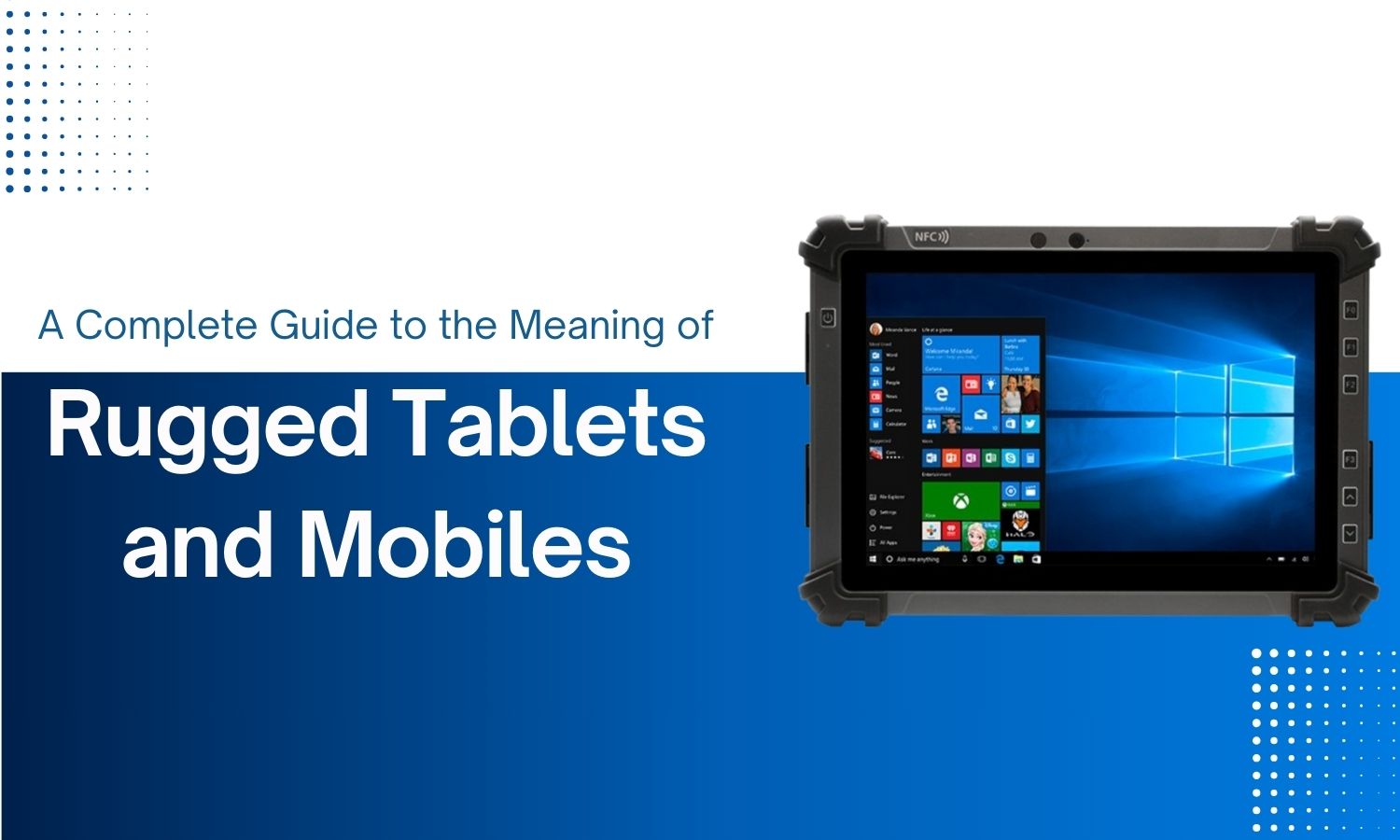
A Complete Guide to the Meaning of Rugged Tablets and Mobiles
- Reliable, durable, and flexible devices require increased demand. The requirement exists for devices that support operations within extreme conditions, including challenging environments, external settings, and industrial applications. The employment of Industrial rugged tablets along with mobiles serves this purpose. Such devices are engineered to work through difficult situations, bringing strong performance alongside durability and mobility features. The following text provides detailed information about rugged tablets and mobiles, including an overview of their design specifications and usage needs, targeted industry examples, and explanations of workplace necessity.
Table Of Contents
- What Does “Rugged” Mean for Devices?
- What is a Rugged Tablet?
- Key Features of Rugged Tablets
- Applications of Rugged Tablets
- What is a Rugged Mobile?
- Applications of Rugged Mobiles
- Why Choose Rugged Tablets and Mobiles
- Choosing the Right Rugged Tablet or Mobile for Your Needs
- Conclusion
What Does “Rugged” Mean for Devices?
In the context of tablets and mobile phones, rugged means the device is specifically engineered to survive conditions that would damage or destroy a standard consumer device.
A rugged device is built to withstand:
Physical shock and drops – reinforced casings, shock-absorbing corners, and hardened screens
Water and dust ingress – sealed ports, gaskets, and rated under IP (Ingress Protection) standards
Extreme temperatures – components that function reliably from -20°C to +60°C or beyond
Vibration and pressure – used in vehicles, machinery, and heavy industrial environments
The term “rugged” is sometimes written as “ruggedized” or “ruggedised” – all three mean the same thing.
Rugged vs Ruggedized: Both terms refer to devices purpose-built for harsh environments. “Rugged” is typically used for devices designed from the ground up for industrial use. “Ruggedized” sometimes refers to standard devices that have been modified or encased for added protection – though in practice the terms are used interchangeably.
What is a Rugged Tablet?
The specialized portable device known as a rugged tablet demonstrates endurance towards harsh conditions in its design. Industrial rugged tablets demonstrate superior durability since they combine shockproof qualities, waterproof features, dust resistance, and extreme durability. These devices are popular for operating in environments that destroy conventional consumer electronic devices.
Key Features of Rugged Tablets
- Durability: These tablets achieve their design purpose of resisting difficult environmental conditions. Such tablets maintain structural integrity when subjected to drops and impacts and handling roughness. These tablets’ built-in, shockproof technology and reinforced cases make them appropriate for construction sites, military operations, and warehouse applications.
- Waterproof and Dustproof: Rugged tablets include IP (Ingress Protection) ratings, establishing their capability to protect against dust and water elements. According to IP67 standards, these tablets will function in 1 meter of water for 30 minutes despite submersion while sustaining total dustproofing.
- Understanding IP Ratings for Rugged Devices
IP (Ingress Protection) ratings tell you exactly how well a device resists dust and water. Here is what the numbers mean:
IP Rating Dust Protection Water Protection Typical Use Case IP54 Partial dust protection (dust resistant) Protected against water splashes from any direction Light outdoor use, construction sites IP65 Completely dust-tight Protected against low-pressure water jets Industrial environments, field service operations IP67 Completely dust-tight Protected against temporary immersion in water up to 1 meter for 30 minutes Warehousing, logistics, military applications IP68 Completely dust-tight Protected against continuous immersion beyond 1 meter (manufacturer specified) Diving equipment, flood-prone environments IP69 / IP69K Completely dust-tight Protected against high-pressure, high-temperature water jets Food processing, agriculture, heavy industry MIL-STD-810: In addition to IP ratings, many rugged tablets and phones carry MIL-STD-810 certification. This is a US military standard that tests for shock, vibration, altitude, humidity, and temperature extremes. MIL-STD-810G (or the newer 810H) is the most commonly cited version in product specifications.
For most industrial applications, look for a minimum of IP65 or IP67 with MIL-STD-810G certification. Defence and extreme outdoor applications typically require IP68 or IP69K.
- Understanding IP Ratings for Rugged Devices
- Extended Battery Life: Manufacturers design rugged tablets with longer battery durations than standard tablets. Extended work periods are possible with these devices because users need not worry about charging since battery life remains long-lasting for automation solutions.
- Bright Screens for Outdoor Visibility: The screens of rugged tablets are equipped with high-brightness technology, which allows better visibility in direct sunlight. The bright display quality of these tablets optimizes their use by employees working both inside and outside.
- Wide Temperature Range: Temperature variations between the extremes of heat and cold do not affect these devices because manufacturers designed them to handle diverse ambient temperatures. The industrial PC operates under various temperature changes because its design allows successful use outdoors throughout the year.
- Enhanced Connectivity: Users benefit from Wi-Fi, Bluetooth, GPS features, and cellular integration when they select rugged tablets.
Applications of Rugged Tablets
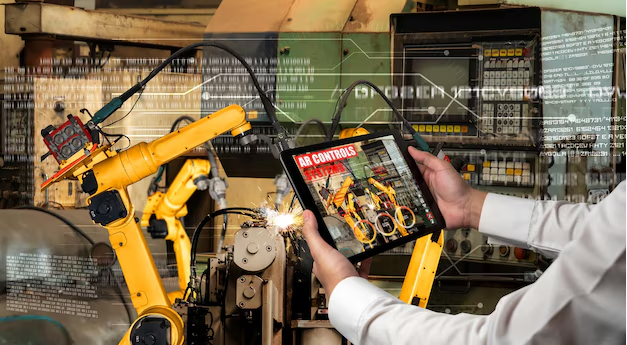
- Industrial and Manufacturing: In manufacturing and industrial environments, rugged tablets replace paper-based processes for inventory tracking, quality control checks, and machine maintenance logs. Workers on the factory floor can access production data, scan barcodes, and submit work orders directly from the device, even in areas with oil, coolant, or metal dust. The combination of bright outdoor-readable screens and glove-friendly touchscreens makes them practical in production line settings.
- Construction and Infrastructure: On construction sites, rugged tablets and mobiles support project management applications, blueprint viewing, and real-time communication between site teams. Devices need to survive drops from scaffolding, exposure to cement dust, and operation in full sunlight. MIL-STD-810 certified tablets with IP65+ ratings are the standard specification for construction applications. Workers use rugged mobiles for push-to-talk communication, GPS navigation across large sites, and photographic documentation of completed work.
- Defence and Military Operations: Ruggedized tablets are mission-critical in defence applications. Military-grade devices must survive ballistic shock, extreme altitude variations, exposure to sand and salt spray, and electromagnetic interference. MIL-STD-810H and IP68 are the baseline certifications for defence deployments. Rugged tablets are used for situational awareness displays, logistics management, and field communications in environments where a device failure is not an option.
- Mining Operations: Mining is one of the harshest environments for any electronic device. Rugged tablets used in underground and open-cut mining must handle continuous vibration from machinery, exposure to coal dust and silica particulate, high humidity, and temperature swings between surface and underground conditions. IP69K-rated tablets with ATEX certification (for use in explosive atmospheres) are required in some mining contexts. Applications include equipment inspection logs, safety checklists, and communication with surface control rooms.
- Healthcare : In clinical settings, rugged tablets support patient record access at the point of care, medication administration scanning, and emergency triage tools. The key requirement is easy disinfection, healthcare rugged tablets have sealed, smooth surfaces that can be wiped with hospital-grade disinfectants without damage. Drop resistance is also critical in fast-moving emergency departments where devices are frequently passed between staff.
What is a Rugged Phone (Rugged Smartphone / Rugged Mobile)?
A rugged phone – also called a rugged smartphone or rugged mobile – is a mobile device built to the same durability standards as a rugged tablet, but in a compact smartphone form factor. Rugged phones combine standard smartphone capabilities (calling, messaging, apps, camera, GPS) with industrial-grade protection against drops, water, dust, and temperature extremes.
The key difference between a rugged phone and a rugged tablet is portability. Rugged phones fit in a pocket and are preferred by workers who need constant mobility – first responders, field technicians, and construction supervisors. Rugged tablets offer larger screens and are preferred for data-intensive tasks like blueprint viewing, inventory management, and remote diagnostics.
Key Features of Rugged Mobiles
- Shock and Drop Resistance: The rugged mobile smartphone design includes features to protect against shock stress, drops, and impacts. The complex cases protect their performance even if the device falls multiple feet to the ground.
- Water and Dust Resistance: Rugged mobile phones share the same high-level water and dust protection features as rugged tablets. Rugged mobile phones resist short underwater submerging and maintain operation until the water exposure ends.
- Enhanced Performance in Harsh Conditions: Due to industrial automation equipment and rugged optimization, these mobile phones perform well under harsh temperature conditions and withstand dirt and mud damage alongside other environmental threats.
- Long Battery Life: A rugged mobile phone features enhanced energy efficiency to maintain power for extended periods without charging interruptions, which is particularly useful for remote area workers.
- Larger Screen: Rugged mobile devices give users a middle ground between transportability and screen area, enabling map reading, schedule monitoring, and real-time data observation during mobility.
- Industrial-Grade GPS and Communication Features: Rugged mobiles include GPS systems that provide precise location tracking and push-to-talk communication capabilities that several industries require for team coordination.
Applications of Rugged Mobiles
- Public Safety and Emergency Services: First responders depend on rugged mobiles to establish effective communications during dangerous situations. Such devices provide first responders with dependable connectivity capabilities and strong construction to stay connected throughout emergencies.
- Construction and Infrastructure: Using rugged mobiles Advantech in India construction enables workers to communicate with their supervisors, track job advancements, and execute construction plans directly on site. The devices provide essential operational support that maintains project efficiency during challenging circumstances.
- Agriculture and Forestry: The combination of durability and real-time capabilities on rugged mobiles helps managers in agriculture and forestry operations. These devices maintain operational capacity across all extreme natural environments.
Rugged Devices vs Regular Consumer Devices: Key Differences
Many organizations start with consumer-grade tablets and phones to save costs – and discover quickly that they are not built for industrial or fieldwork environments. Here is a direct comparison:
| Feature | Regular Consumer Device | Rugged Device |
| Drop Resistance | Typically survives drops from 0.5–1 meter on a flat surface | Designed to withstand drops from 1.2–1.8 meters or higher onto concrete (MIL-STD-810G compliant) |
| IP Rating | IP53–IP68 (varies by model, often not tested for industrial conditions) | IP65–IP69K with industrial-grade testing and certification |
| Operating Temperature | Typically 0°C to 35°C | -20°C to +60°C or wider operating range |
| Screen Brightness | 400–600 nits | 800–1,400+ nits for sunlight readability |
| Touch Input | Optimized for bare fingertips | Supports gloves, stylus, and wet-finger operation |
| Battery Life | 8–12 hours under light usage | 10–20+ hours, often with hot-swappable battery options |
| Lifespan in Field | 1–2 years before frequent damage or replacement | 3–5+ years, designed for demanding field environments |
| Repair & Support | Standard consumer warranty and support | Enterprise-grade support, extended warranties, and on-site repair options |
| Total Cost of Ownership (TCO) | Lower upfront cost but higher replacement and downtime expenses | Higher initial investment but lower long-term ownership costs due to durability and reliability |
The real cost comparison: A consumer tablet costing ₹30,000 that lasts 18 months in a warehouse environment costs more over 5 years than a rugged tablet costing ₹90,000 that runs reliably for 5 years – without factoring in downtime, data loss, or worker safety incidents caused by device failure.
Why Choose Rugged Tablets and Mobiles
Rugged tablets and mobiles function better than standard devices because they were designed to maintain performance while protecting workers in harsh conditions. Organizations should choose rugged tablets and mobiles for their business and operational advantages.
- Reduced Downtime: Using traditional tablets and mobiles leads to equipment failures when operating in demanding settings, which causes time loss for organizations. Industrial rugged tablets and mobiles are specially built to handle rough environments, thus lowering device breakdowns and improving operational performance.
- Cost Savings: The initial investment for rugged devices surpasses standard tablet or mobile phone prices, but their durability reduces repair expenses and replacement costs. Through product longevity, the expense decreases substantially.
- Increased Productivity: Rugged devices with industrial displays empower workers to maintain constant connections through their devices while also accessing vital information from anywhere on the job. Higher operational efficiency combines accelerated decision processes with better results.
- Safety: Rugged devices protect essential information, mapping tools, and communication systems for workers in dangerous construction sites, mining operations, and military settings.
- Versatility: Implementing rugged devices within construction sites alongside mining operations and military activities enhances safety measures by maintaining critical operational tools accessible to personnel who operate under harsh environmental conditions.
Rugged Tablets and Mobiles in India: What Buyers Should Know
When selecting a rugged tablet or mobile for industrial or fieldwork, there are several factors to consider:
- Durability and Protection Level: Look for devices with a high IP rating (IP67 or higher) and military-grade protection (MIL-STD-810G or higher). These ratings indicate how well the device can withstand harsh environments.
- Performance and Specifications: Choose a rugged tablet or mobile with the appropriate processing power, storage, and connectivity features to meet your operational requirements.
- Battery Life: Longer battery life is essential, especially for workers in remote areas who may not have easy access to charging stations.
- Display: Ensure the device has a bright screen visible outdoors, even in direct sunlight.
- Support and Warranty: Look for manufacturers that offer strong customer support and warranties, as this can save you time and money if any issues arise with the device.
Conclusion
Rugged tablets and mobiles are essential for industries that require durable and reliable devices to perform in extreme conditions. From Advantech industrial PC construction sites to military operations, these devices are built to handle the challenges of the real world. Whether you need a rugged tablet for heavy-duty tasks or a rugged mobile for quick communication, both offer unparalleled functionality and resilience.
When choosing a rugged device, it’s essential to consider factors such as durability, battery life, and performance to ensure that you select the right device for your needs. Investing in rugged tablets and mobiles can improve productivity, reduce downtime, and ensure safety in even the harshest working environments.